Your competent partner for construction site waste management
Old sleepers, old rails, small iron components and ballast material must be disposed of professionally, in some cases as hazardous waste, always with complete documentation.
As a certified waste management company, we take care of the whole process: from consultation and the official documentation procedure to transport and recycling. You receive the disposal documentation, and we take care of the rest.
A track stays in place for decades. At some point, the day comes when it is dismantled. Then a problem arises that many underestimate, and an opportunity that many overlook.
Back on track
For us, this isn't an add-on business, but an independent pillar since 1997. Back then, Holz-Fehlings Entsorgung GmbH was founded, and a year later it was merged with the track technology business. We supply the material, we collect it back, and we sell it again.
Fehling's group
A one-stop shop
We deliver the material, collect it, process it and put it back into the track. Go via a station.
stopped
DeliveryRails, sleepers, fastening and ballasting materials from stock to your site.
dismantlingWe are dismantling the track system and taking away everything that comes out of it.
SortingAt each location, we separate into recyclable and disposal waste.
treatmentRail, sleeper, fastening and ballast can be made reusable again.
ReuseRefurbished material goes back into the market as a secondary raw material.
How we work
We clarify the classification, verification procedure and transport. Depending on the volume and location, we reach our sites flexibly by lorry, train or ship.
Our nationwide disposal network enables the professional disposal of residual materials throughout Germany, with short transport routes.
Sorting
At every location, we sort the delivered track construction products specifically by material type and reusability.
utilisation
Depending on the result, we prepare the products optimally for proper disposal or give them a second life on the market through reconditioning.
Network
Professional disposal with full documentation, from wooden sleepers to hazardous waste.
Logistics
From collection in person to shipping container: the right logistics for every volume.
Rails
Old rails are rarely waste. They are either still usable or they are steel, and steel is 100 per cent recyclable.
process
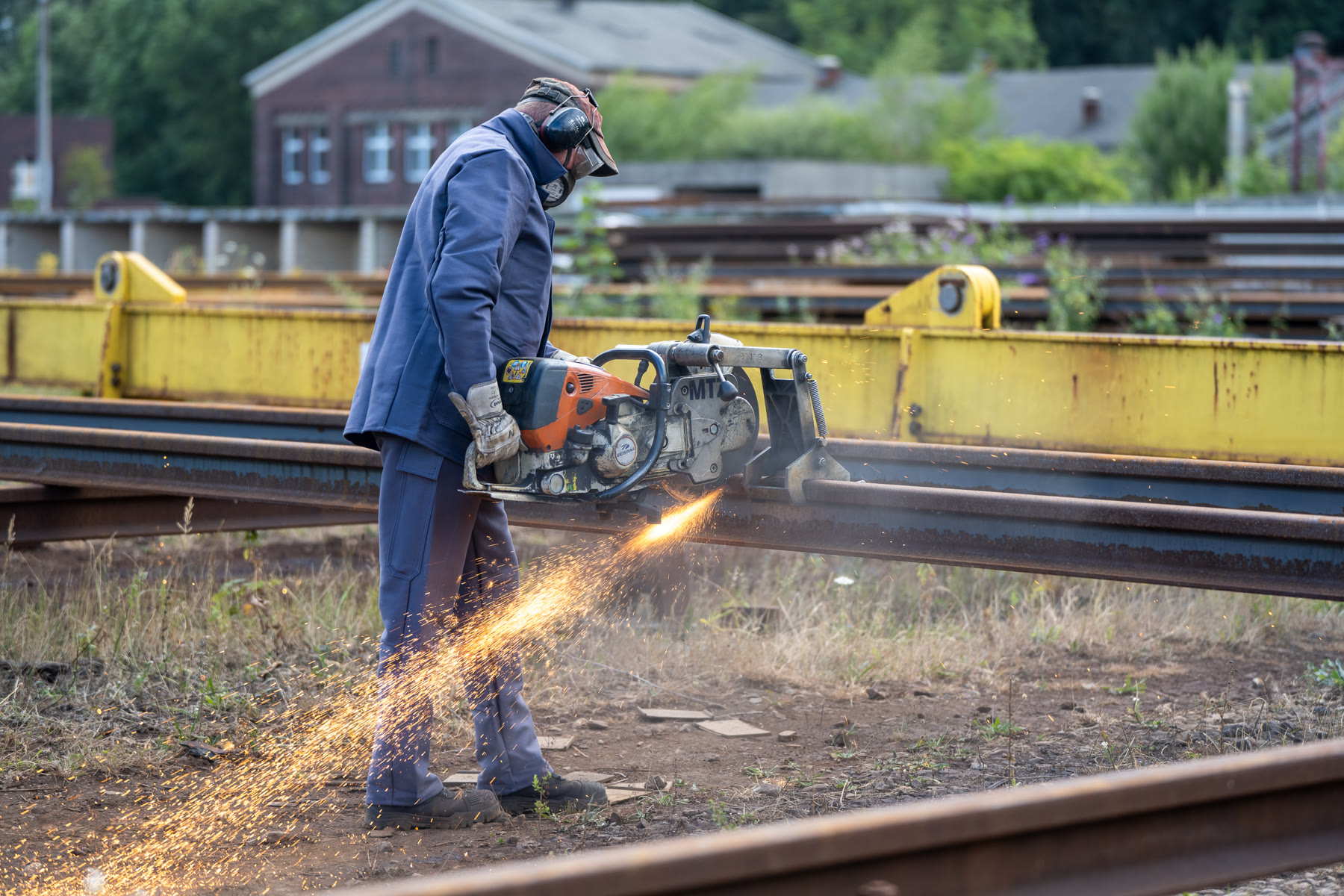
We measure, cut and weld used rails and track panels, preparing them for reuse.
recycle
What is no longer usable goes to material recycling. The steel stays in the loop.
Sleepers
Not every wooden sleeper needs to come out. With InsideFume®, wooden sleepers that are still sufficiently solid can be treated in such a way that they are guaranteed to remain in the track for another eight years, at a fraction of the cost of replacing them.
What has to be removed, we collect, inspect and channel in the right direction. Concrete sleepers can be crushed and reused as recycled material.
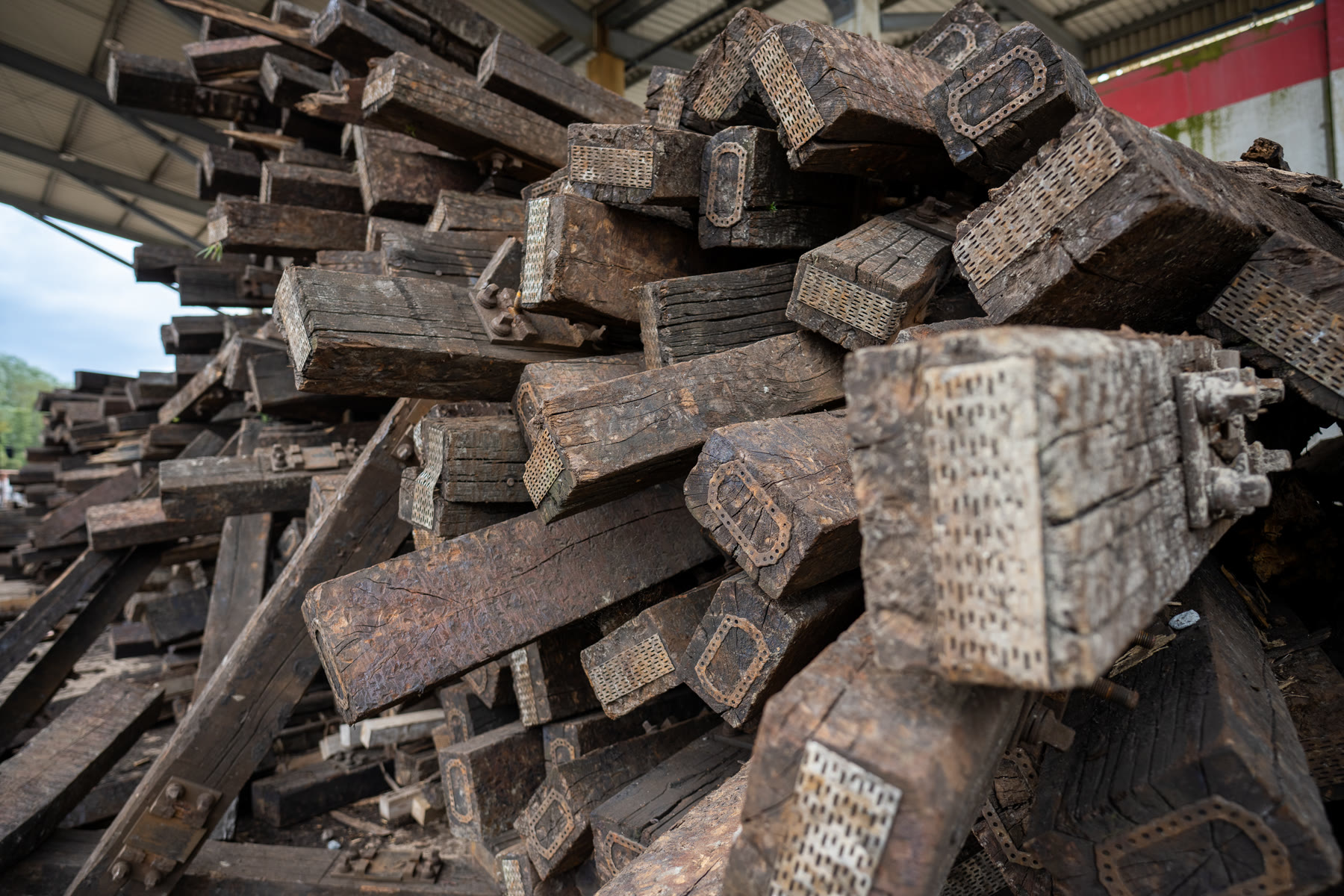
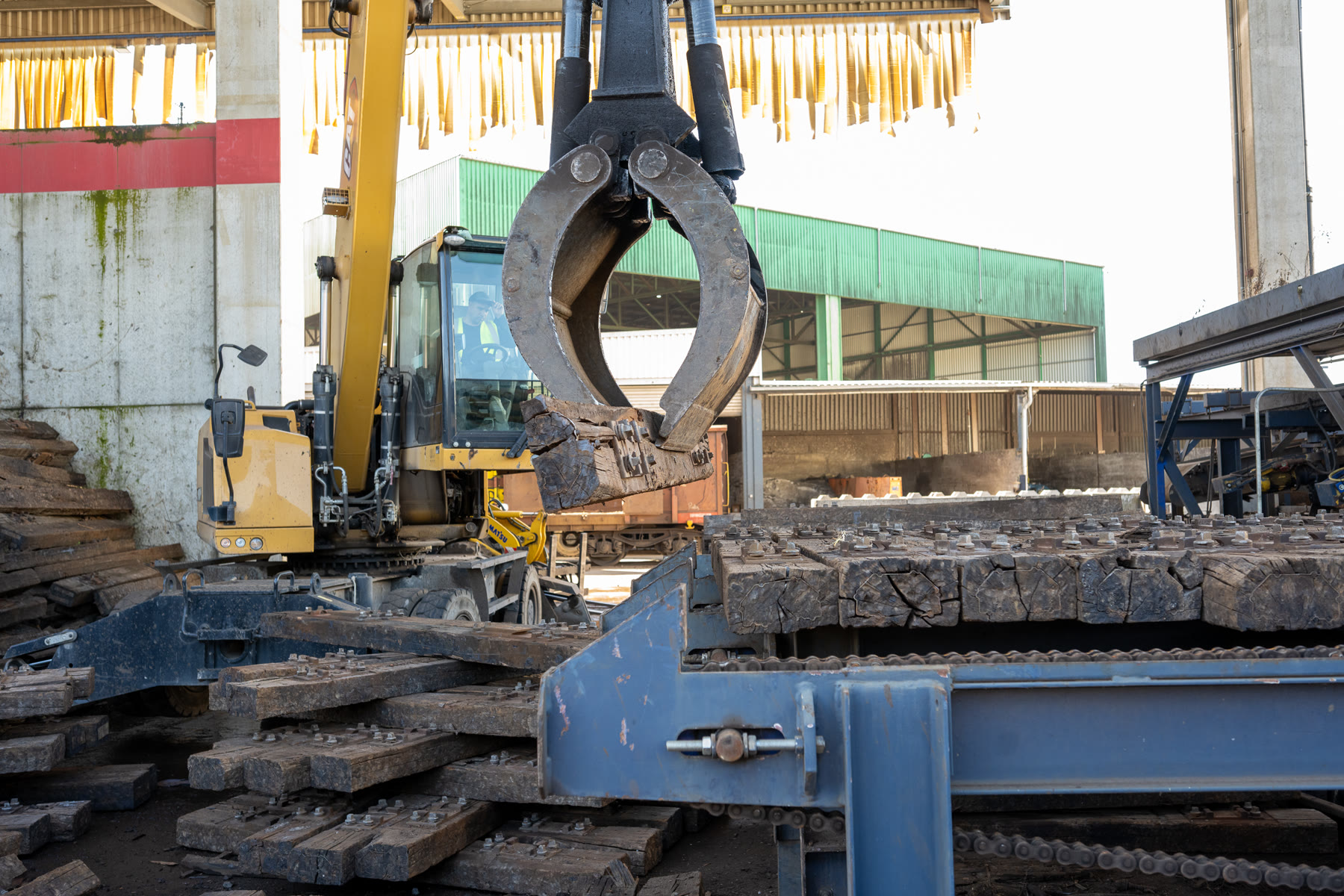
Coal tar-impregnated wooden sleepers are classified as hazardous waste under the waste code AVV 170204 classified and may only be recycled through approved channels. At our site Herne, a shared location with REMONDIS, we sort wooden sleepers and fastening materials and operate an automated, protective-ventilated de-plating plant for old sleepers.
concrete sleeper
Advice
Advice on all waste management issues, from classification to the recipient.
Documentation
Preparation of proper disposal documentation.
Transport
Co-ordination and execution of waste transport by lorry and rail wagon.
preparation for re-use
We inspect and sort concrete sleepers that are still fit for service. They go back into the track as second-hand sleepers.
recycling processing
What is no longer usable is crushed and reused as recycled material.
timber sleeper
Advice
Advice on all waste management issues, from classification to the recipient.
verification procedure
Implementation of official waste disposal verification procedures.
Documentation
Preparation of proper disposal documentation.
Transport
Co-ordination and execution of waste transport by lorry and rail wagon.
Flattening
Flattening of the old sleepers using our automated, ventilated flattening plant.
Biomass
Production of biomass woodchips from tar-oil-impregnated wooden sleepers.
plastic threshold
Advice
Advice on all waste management issues, from classification to the recipient.
Documentation
Preparation of proper disposal documentation.
Transport
Co-ordination and execution of waste transport by lorry and rail wagon.
preparation for re-use
We check and sort plastic sleepers that are still operational for reuse.
recycling processing
Anything that can no longer be used is sent for recycling.
Fixings
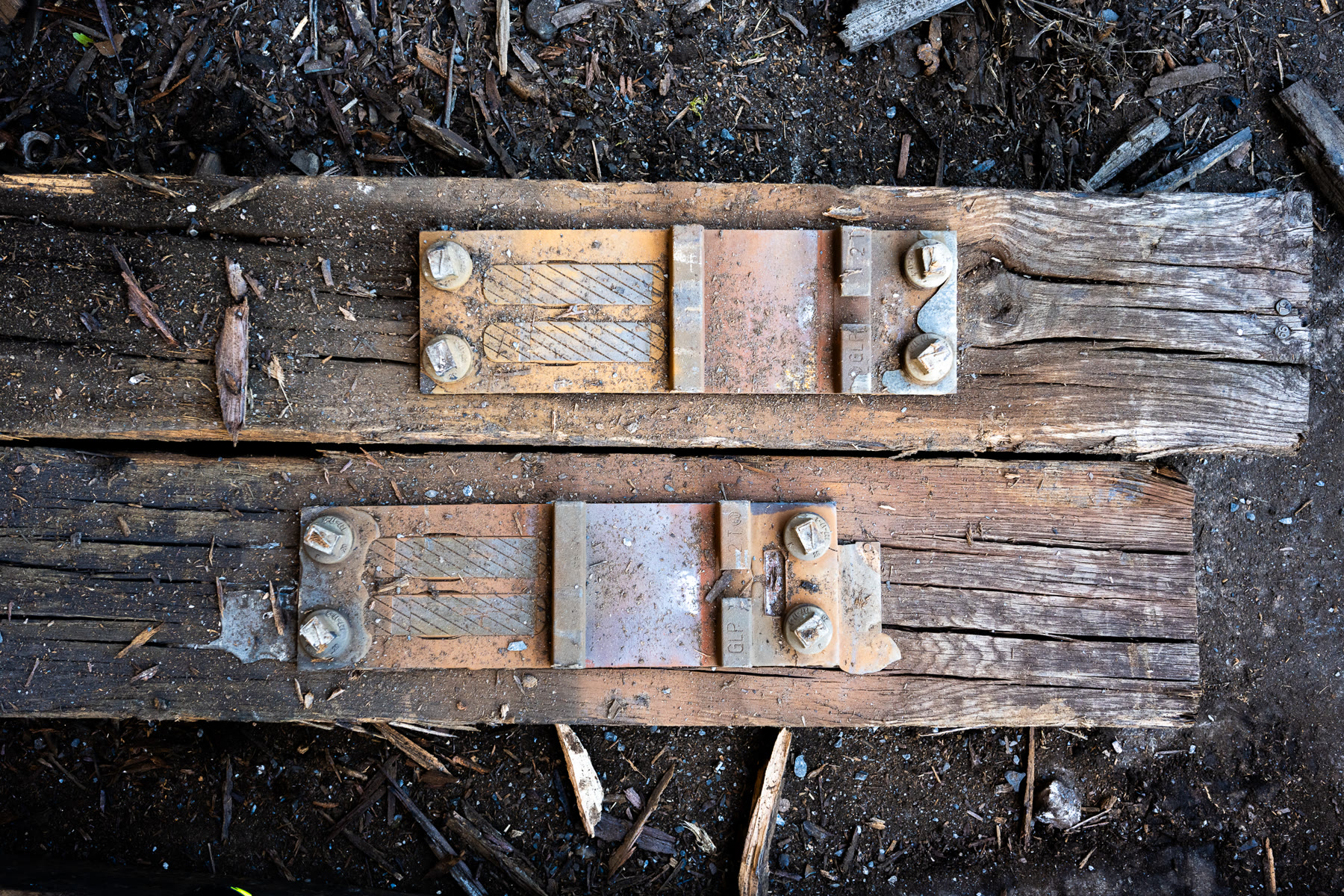
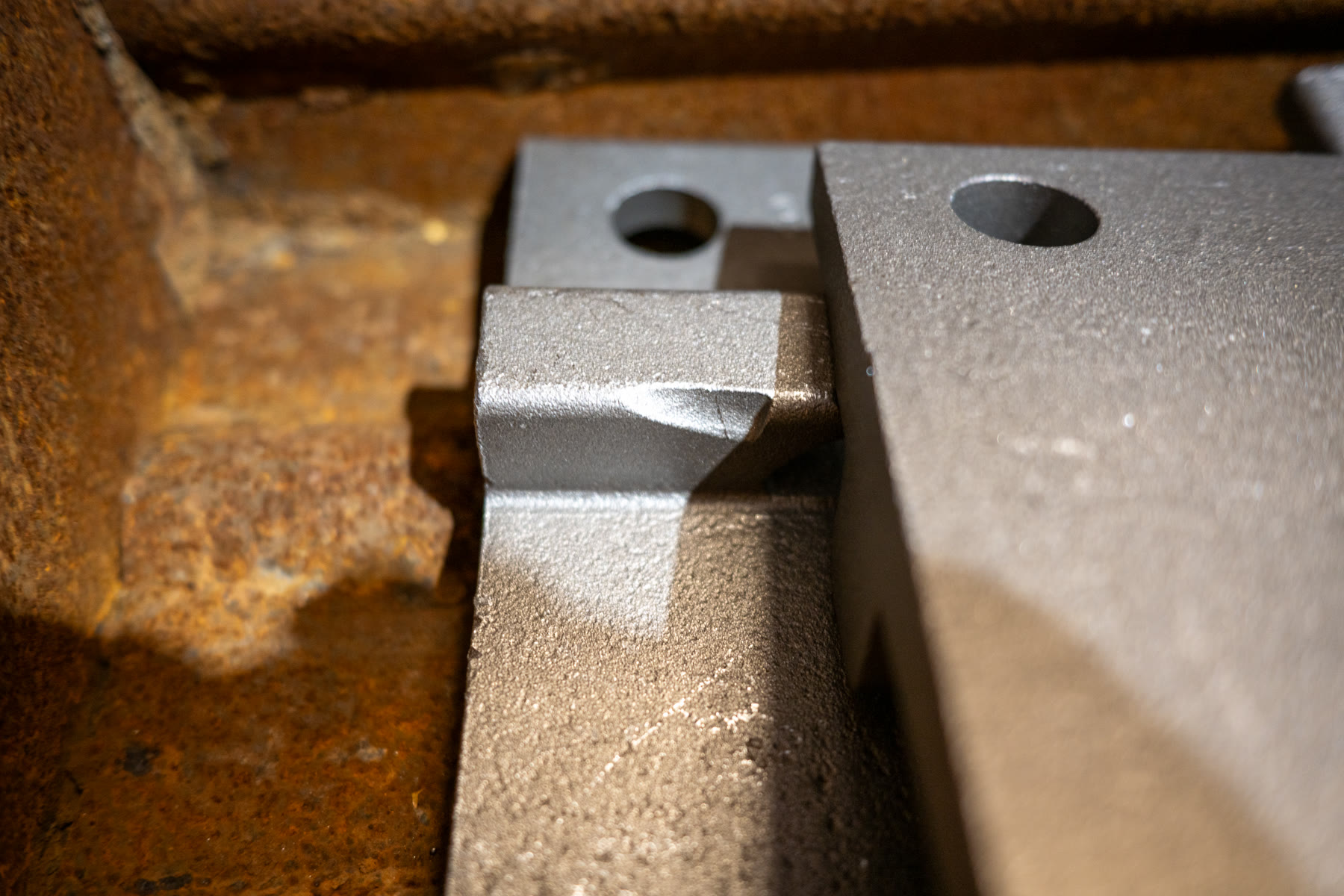
Small track fittings are produced in large quantities during track dismantling: sleeper screws, spring washers, tie plates, clamping plates, fishplates.
process
We inspect, sort and recondition fastening materials, for example by sandblasting ribbed base plates in our sandblasting facilities.
Back in the market
Suitable parts go back onto the market as second-hand material, the rest into material recycling.
bedding material
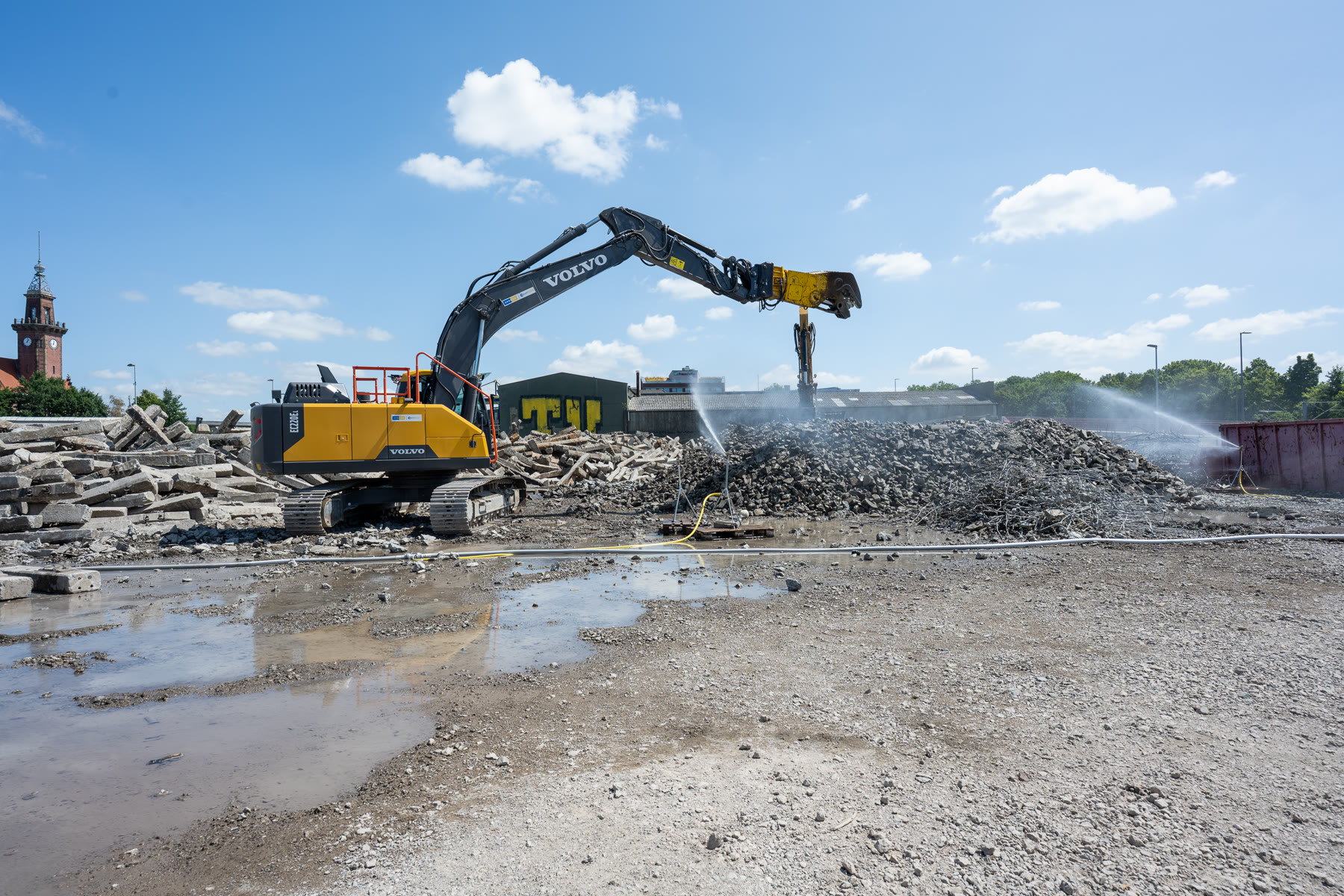
At Dortmund we accept used ballast and process it. The site can be reached by lorry and ship.
Together with the BFV Recycling GmbH we cover the entire service chain: from material delivery, transport and project management to professional disposal and consultation.
Advice
Advice on all waste management issues, from classification to the recipient.
bulk goods
Disposal of bulk goods of all kinds.
Hazardous waste
Proper disposal of hazardous waste.
sampling
Sampling according to PN 98 as well as classification in accordance with the German Ordinance on Substitute Building Materials (EBV) and LAGA.
Transport
Organisation and execution of all transport.
Project management
Holistic project management and technical, practice-oriented consultancy.
track dismantling
Dismantling a railway line is about more than just removing tracks. It is about permits, waste classification, transport logistics and the question of what happens to the material. We take care of the whole process.
Dismantling of entire track systems
Planning and execution including the utilisation of superstructure materials
Collection, transport and recovery of used rails, sleepers and small ironwork
Execution of official disposal procedure documentation
Preparation of the proper disposal documentation
Co-ordination of transport by lorry and railcar
The major advantage: Because we are simultaneously a certified waste management company and resell secondary raw materials ourselves, everything stays in one hand. You do not need a second contractor for disposal, and what still has value is also treated as valuable.
Recording and evaluation
We are inspecting the facility and evaluating which material can be processed as secondary raw material and what needs to be disposed of.
Planning and approval
We are planning the dismantling work, clarifying the waste classifications and carrying out the official verification procedures.
dismantling
The dismantling will be carried out in accordance with the agreed schedule.
Removal
We organise the transport by lorry and wagon and send the material for recycling.
Documentation
You will receive the complete disposal documentation.
waste management logistics
Depending on volume and location, we rely on various transport routes. Our sites can be flexibly reached by lorry, train or ship.
This is how every project finds the right logistics, from a single container to a block train.
Collection in person
We will collect the products from your premises and take care of the loading ourselves.
lorry
For medium quantities, we provide containers that are exchanged by lorry.
Train
We handle large quantities directly by rail wagon. Our sites in Scholven and Herne are connected by train.
Ship
For very large volumes, we use shipping by vessel, for instance via our trimodally connected site in the Dortmunder port.